
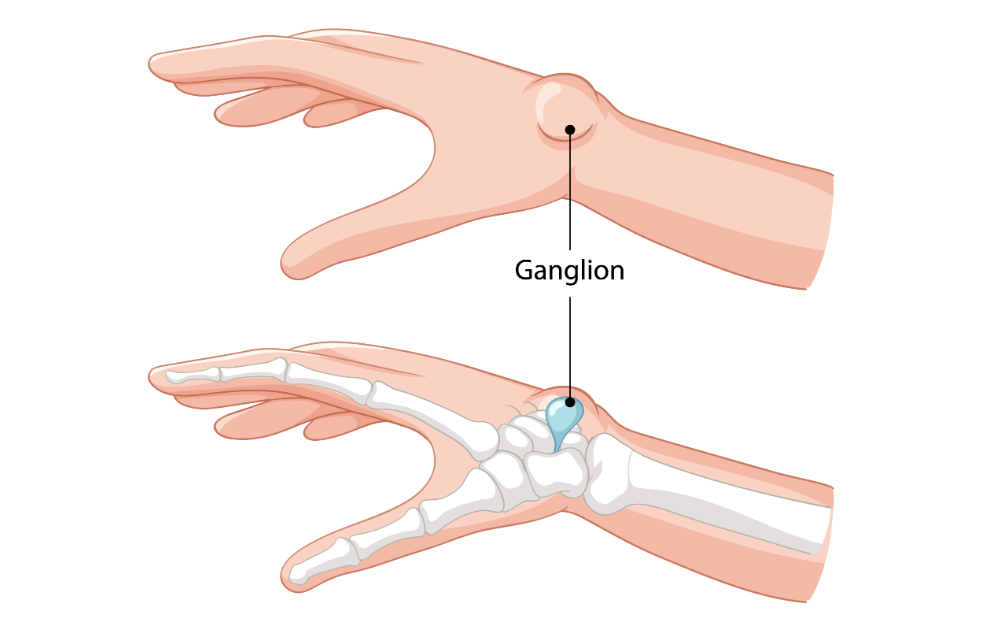
What is a Ganglion Cyst?
A ganglion cyst is a noncancerous lump that often forms near joints or tendons. Most people notice these cysts on the wrist or hand. However, they can also appear on the foot or ankle. Ganglion cysts are filled with a jelly-like fluid. Because they are soft and round, many people call them wrist lumps or hand cysts. Although these cysts are not dangerous, they can cause pain or discomfort. Early orthopedic care can help manage symptoms and prevent problems.
Common Symptoms of Ganglion Cyst
Ganglion cysts can cause different symptoms. Sometimes, you may not feel any pain. But in other cases, the cyst can press on nearby nerves. As a result, you might notice:
For example, some people find the lump grows with activity and shrinks with rest. However, not all cysts cause symptoms.
Causes and Risk Factors
Doctors do not know the exact cause of ganglion cysts. Still, several factors may increase your risk. For instance, joint or tendon irritation can lead to cyst formation. In addition, repeated stress on the wrist or hand may play a role. The following risk factors are common:
Although anyone can get a ganglion cyst, these factors make it more likely.
How Ganglion Cysts are Diagnosed
Doctors use several steps to diagnose a ganglion cyst. First, they will ask about your symptoms and medical history. Next, they will examine the lump. Often, a ganglion cyst is soft and moves under the skin. Sometimes, the doctor shines a light through the lump. Because the fluid inside is clear, the light passes through easily. In some cases, your doctor may order an ultrasound or MRI. These tests help rule out other causes of wrist lumps or hand cysts. Rarely, a small sample of fluid may be taken for testing.
Treatment Options for Ganglion Cyst
Many ganglion cysts do not need treatment. In fact, some cysts go away on their own. However, if the cyst is painful or limits movement, treatment may help. Options include:
According to the American Academy of Orthopaedic Surgeons, most treatments are safe and effective. Still, cysts can sometimes come back after removal.
Prevention and Lifestyle Tips
There is no sure way to prevent ganglion cysts. However, you can lower your risk with some simple steps. For example, try to avoid repeated stress on your wrists and hands. If you play sports or do activities that strain your joints, take breaks often. In addition, use proper techniques when lifting or typing. If you notice a lump, avoid squeezing or popping it. This can cause more harm than good. Instead, seek advice from a healthcare provider.
When to See a Doctor
Most ganglion cysts are harmless. However, you should see a doctor if:
Early orthopedic care can help prevent complications. Moreover, a doctor can rule out other causes of wrist lumps or hand cysts.
In summary, ganglion cysts are common and usually harmless. But if you have concerns, consult an orthopedic specialist Kundan Kumar Jha for personalized advice on ganglion cysts.